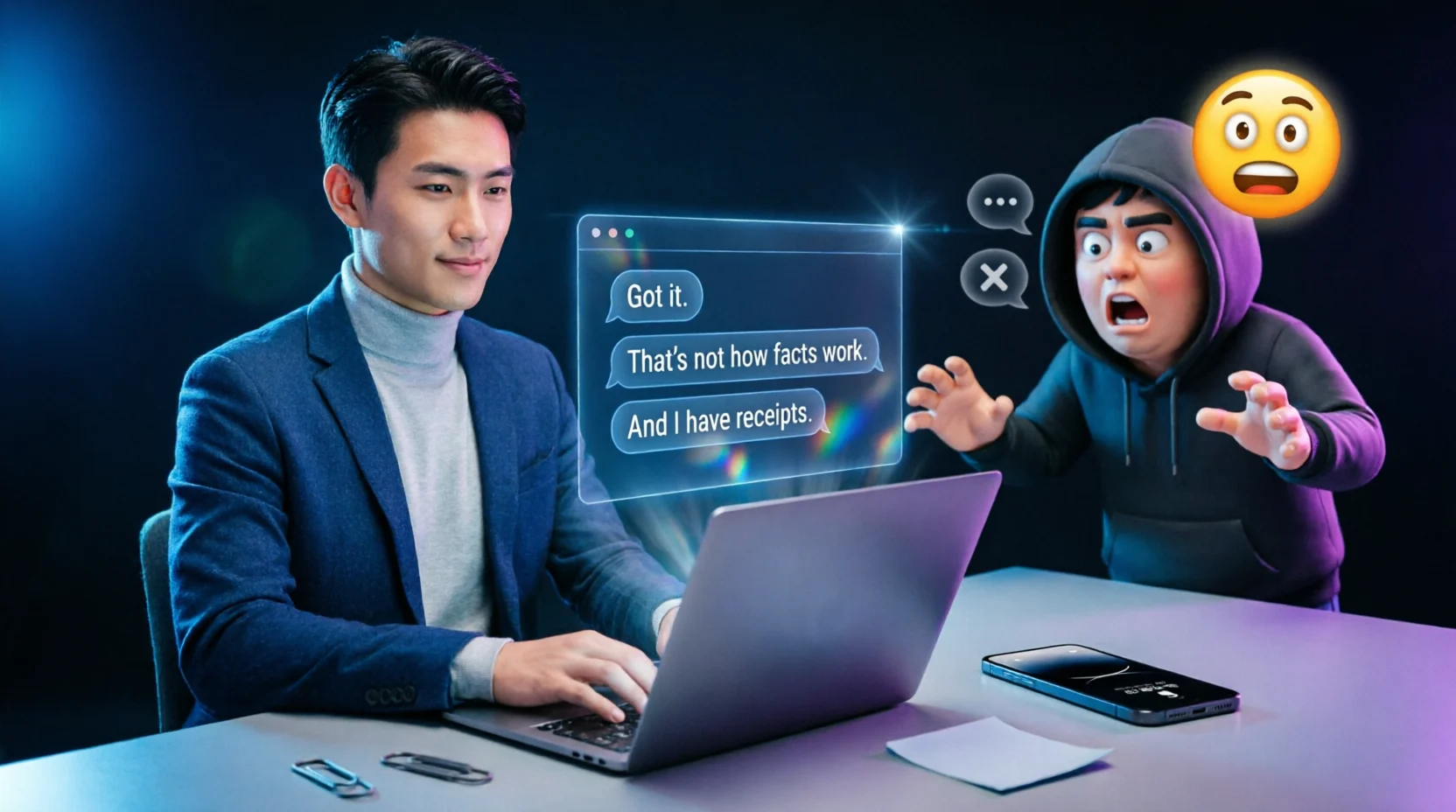
Online trolls thrive on attention, arguments, and emotional reactions. The best comebacks to destroy online trolls are not always the harshest ones—they’re the responses that leave trolls with nothing to work with. A clever, calm, or funny reply can end a conversation faster than a long argument ever will.
If someone is trying to provoke you on social media, in comments, or through messages, the goal is to stay in control. The comebacks below help you respond with confidence, humor, and class while protecting your peace and reputation online.
Focus Keyword: comebacks to destroy online trolls
• “Thanks for sharing your opinion.”
Best for: Casual disagreements and mild trolling.
Alternative: “I appreciate your perspective.”
Examples:
“Thanks for sharing your opinion. Have a great day.”
“I see your point. Thanks for commenting.”
• “That seemed more important to you than it did to me.”
Best for: People trying to start unnecessary drama.
Alternative: “Interesting that you feel so strongly about it.”
Examples:
“That seemed more important to you than it did to me.”
“I wasn’t nearly as invested in this as you were.”
• “You okay?”
Best for: Trolls making random personal attacks.
Alternative: “Everything good on your end?”
Examples:
“You okay? That was oddly aggressive.”
“Everything good? You seem upset.”
• “I hope your day gets better.”
Best for: Respectful but effective responses.
Alternative: “Wishing you a better day.”
Examples:
“I hope your day gets better.”
“You sound frustrated. Hope things improve.”
• “That’s a lot of emotion for a comment section.”
Best for: Overly dramatic trolls.
Alternative: “This seems deeper than the topic itself.”
Examples:
“That’s a lot of emotion for a comment section.”
“We’re discussing a post, not solving world peace.”
• “Imagine being this bothered.”
Best for: Funny social media comebacks.
Alternative: “That’s an impressive level of concern.”
Examples:
“Imagine being this bothered by a stranger online.”
“That’s a lot of effort for something you don’t like.”
• “I’ll give your feedback the attention it deserves.”
Best for: Sarcastic but clean responses.
Alternative: “I’ll take that under consideration.”
Examples:
“I’ll give your feedback the attention it deserves.”
“Thanks. I’ll file that accordingly.”
• “You seem determined to be unhappy.”
Best for: Constant negative commenters.
Alternative: “Negativity appears to be your hobby.”
Examples:
“You seem determined to be unhappy.”
“You really work hard to find problems.”
• “Not every thought needs to become a comment.”
Best for: Random rude remarks.
Alternative: “Some thoughts are better left unposted.”
Examples:
“Not every thought needs to become a comment.”
“That could have stayed in drafts.”
• “I’m surprised you typed that and hit send.”
Best for: Absurd or offensive comments.
Alternative: “Bold choice of words.”
Examples:
“I’m surprised you typed that and hit send.”
“That was certainly a decision.”
• “Your approval wasn’t on my checklist.”
Best for: Critics seeking control.
Alternative: “I wasn’t looking for permission.”
Examples:
“Your approval wasn’t on my checklist.”
“I’ll survive without your endorsement.”
• “You’re giving this more energy than I am.”
Best for: Long arguments online.
Alternative: “I don’t think this matters that much.”
Examples:
“You’re giving this more energy than I am.”
“I admire your dedication to this debate.”
• “That joke almost landed.”
Best for: Trolls attempting insults.
Alternative: “Nice try.”
Examples:
“That joke almost landed.”
“You were close with that one.”
• “The block button is free.”
Best for: Social media conflicts.
Alternative: “You can always scroll past.”
Examples:
“The block button is free.”
“You don’t have to stay here.”
• “I’m not arguing with someone committed to misunderstanding.”
Best for: Endless debates.
Alternative: “This conversation isn’t productive.”
Examples:
“I’m not arguing with someone committed to misunderstanding.”
“We clearly aren’t having the same discussion.”
• “You’ve mistaken confidence for arrogance.”
Best for: Personal criticism.
Alternative: “Being confident isn’t a crime.”
Examples:
“You’ve mistaken confidence for arrogance.”
“Self-respect can look unfamiliar to some people.”
• “That sounded better in your head, didn’t it?”
Best for: Weak insults.
Alternative: “I think that needed another draft.”
Examples:
“That sounded better in your head, didn’t it?”
“You may want to workshop that one.”
• “Thanks for increasing my engagement.”
Best for: Social media creators.
Alternative: “The algorithm appreciates your help.”
Examples:
“Thanks for increasing my engagement.”
“Every comment helps the post.”
• “You’re entitled to your opinion.”
Best for: Professional and respectful situations.
Alternative: “We can agree to disagree.”
Examples:
“You’re entitled to your opinion.”
“I respect your right to see it differently.”
• “I refuse to compete with your negativity.”
Best for: Maintaining professionalism.
Alternative: “I’m choosing not to engage.”
Examples:
“I refuse to compete with your negativity.”
“I’ll leave the hostility to you.”
• “We clearly have different hobbies.”
Best for: Funny responses to obsessed trolls.
Alternative: “We spend our time differently.”
Examples:
“We clearly have different hobbies.”
“I can’t imagine caring this much.”
• “I appreciate your dedication to being wrong.”
Best for: Lighthearted sarcasm.
Alternative: “Your confidence is impressive.”
Examples:
“I appreciate your dedication to being wrong.”
“You’re committed, I’ll give you that.”
• “The internet must be exhausting for you.”
Best for: Chronic complainers.
Alternative: “You seem upset by everything.”
Examples:
“The internet must be exhausting for you.”
“That sounds like a tiring way to live.”
• “You’re arguing with a version of me that exists only in your head.”
Best for: Misrepresentation and assumptions.
Alternative: “You’re responding to something I never said.”
Examples:
“You’re arguing with a version of me that exists only in your head.”
“I don’t recognize the person you’re describing.”
• “I’m comfortable with your disagreement.”
Best for: Mature discussions.
Alternative: “We don’t have to agree.”
Examples:
“I’m comfortable with your disagreement.”
“Different opinions are fine with me.”
• “Your comment says more about you than me.”
Best for: Personal attacks.
Alternative: “That reflects your mindset.”
Examples:
“Your comment says more about you than me.”
“I’ll let that statement represent itself.”
• “Scrolling was always an option.”
Best for: People complaining about content.
Alternative: “Nobody forced you to stop here.”
Examples:
“Scrolling was always an option.”
“You chose to engage.”
• “That’s an interesting way to ask for attention.”
Best for: Attention-seeking trolls.
Alternative: “You certainly found a way to be noticed.”
Examples:
“That’s an interesting way to ask for attention.”
“Mission accomplished—you got noticed.”
• “I’m not your opponent. Relax.”
Best for: Heated arguments.
Alternative: “This isn’t a competition.”
Examples:
“I’m not your opponent. Relax.”
“We’re discussing, not battling.”
• “Have the day you deserve.”
Best for: Short and memorable exits.
Alternative: “Take care.”
Examples:
“Have the day you deserve.”
“I’ll leave you with that.”
• Silence Is the Ultimate Comeback
Best for: Serious trolling, harassment, and toxic behavior.
Alternative: Block, mute, or report.
Examples:
“Seen.”
“No reply at all.”
FAQs:
What is the best comeback for an online troll?
The best comeback is often calm, clever, and brief. A response that shows confidence without anger usually works best.
Should I argue with internet trolls?
In most cases, no. Trolls often want attention and emotional reactions. Avoiding long arguments usually saves time and energy.
Are funny comebacks effective against trolls?
Yes. Humor can remove the tension, make the troll look unreasonable, and entertain other readers without escalating conflict.
When should I block an online troll?
If the behavior becomes repetitive, abusive, threatening, or harmful, blocking and reporting is usually the smartest option.
Is ignoring trolls better than replying?
Often, yes. Many trolls lose interest when they don’t receive attention. Silence can be more powerful than any comeback.
Conclusion
The best comebacks to destroy online trolls aren’t necessarily cruel or aggressive. The strongest responses are often calm, witty, confident, and brief. If you choose humor, professionalism, sarcasm, or complete silence, the real victory is refusing to let a troll control your emotions. Use these replies when appropriate, and remember that protecting your peace online is always more important than winning an argument.

I am Joshua Turner, an administrator at ReplyBost, helping create useful, clear, and engaging content that makes finding the right replies and responses easier.