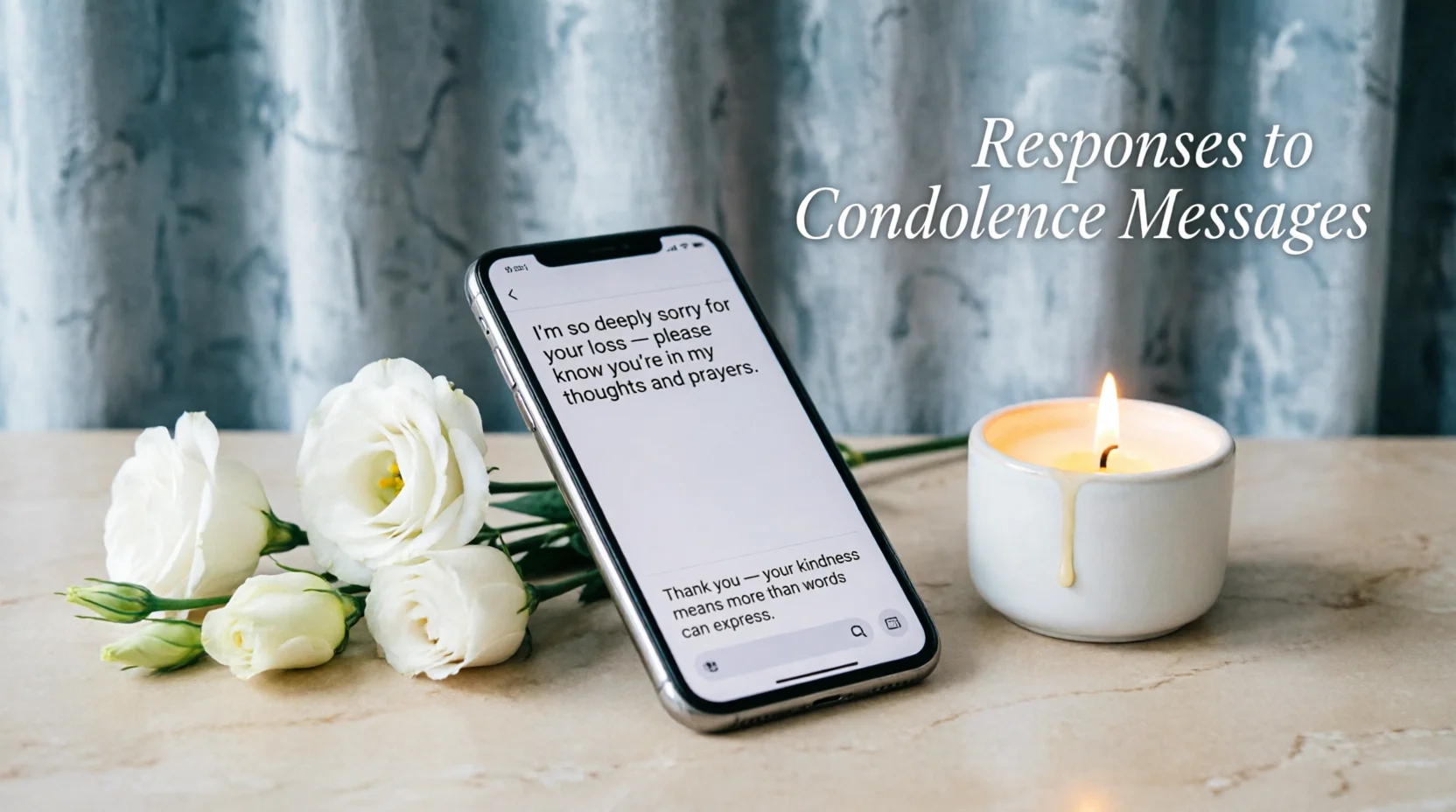
Losing someone is never easy, and receiving kind condolence messages from friends, family, coworkers, and acquaintances can provide comfort during a difficult time. Many people appreciate the support but struggle to find the right words to respond. If you’re wondering how to reply respectfully and sincerely, simple gratitude is often the best approach.
The best responses to condolence messages acknowledge the person’s kindness, express appreciation for their support, and reflect your feelings honestly. If you need a short text reply, a formal response, or a heartfelt message for close friends and family, the examples below can help you respond with warmth and grace.
• Thank You for Your Kind Words
A simple and timeless response that works in almost any situation.
Best for: General condolence messages from anyone.
Alternative: “I truly appreciate your support.”
Examples:
“Thank you for your kind words during this difficult time.”
“Your thoughtful message means a lot to me. Thank you.”
• Thank You for Your Support
This response highlights the comfort their support provides.
Best for: Friends, coworkers, and extended family.
Alternative: “Your support has been greatly appreciated.”
Examples:
“Thank you for your support and understanding.”
“I appreciate your support more than words can express.”
• Your Message Brought Me Comfort
Let people know their message genuinely helped.
Best for: Heartfelt personal messages.
Alternative: “Your words gave me strength.”
Examples:
“Your message brought me comfort when I needed it most.”
“Thank you for your thoughtful words; they truly helped.”
• I Appreciate You Thinking of Me
A warm response that acknowledges their care.
Best for: Friends, neighbors, and acquaintances.
Alternative: “Thank you for keeping me in your thoughts.”
Examples:
“I appreciate you thinking of me during this difficult time.”
“Thank you for reaching out and keeping me in your thoughts.”
• Thank You for Being There for Me
A meaningful response when someone offered emotional support.
Best for: Close friends and family.
Alternative: “Your presence means so much.”
Examples:
“Thank you for being there for me when I needed support.”
“I’m grateful to have you by my side during this time.”
• Your Kindness Means So Much
This response emphasizes gratitude and appreciation.
Best for: Sincere condolence messages.
Alternative: “Your compassion means a great deal.”
Examples:
“Your kindness means so much to me and my family.”
“Thank you for your compassion and understanding.”
• Thank You for Your Prayers
Ideal when someone offers prayers or spiritual support.
Best for: Religious or faith-based messages.
Alternative: “We appreciate your prayers and thoughts.”
Examples:
“Thank you for your prayers and encouragement.”
“We are grateful for your prayers during this difficult season.”
• We Truly Appreciate Your Thoughtfulness
A gracious response from you and your family.
Best for: Group messages or family replies.
Alternative: “Our family appreciates your kindness.”
Examples:
“We truly appreciate your thoughtfulness and support.”
“Thank you for keeping our family in your thoughts.”
• Your Words Meant a Lot to Me
A personal and heartfelt reply.
Best for: Meaningful messages from loved ones.
Alternative: “Your message touched my heart.”
Examples:
“Your words meant a lot to me during this difficult time.”
“Thank you for sharing such comforting thoughts.”
• Thank You for Reaching Out
Short, simple, and sincere.
Best for: Text messages and social media.
Alternative: “I appreciate your message.”
Examples:
“Thank you for reaching out and offering your support.”
“I appreciate you taking the time to send a message.”
• We Are Grateful for Your Support
A respectful family-oriented response.
Best for: Family announcements and public replies.
Alternative: “Thank you for standing with us.”
Examples:
“We are grateful for your support and kindness.”
“Thank you for helping us through this difficult time.”
• Your Sympathy Is Deeply Appreciated
A more formal expression of gratitude.
Best for: Professional and formal situations.
Alternative: “Thank you for your heartfelt sympathy.”
Examples:
“Your sympathy is deeply appreciated.”
“Thank you for your thoughtful expression of sympathy.”
• Thank You for Sharing in Our Grief
This response recognizes their emotional support.
Best for: Close friends and family.
Alternative: “Thank you for mourning alongside us.”
Examples:
“Thank you for sharing in our grief and loss.”
“Your support has helped us through a painful time.”
• I Am Touched by Your Kindness
A heartfelt acknowledgment of compassion.
Best for: Personal condolence messages.
Alternative: “Your kindness truly touched me.”
Examples:
“I am touched by your kindness and support.”
“Thank you for your caring and thoughtful message.”
• Thank You for Your Comforting Words
A direct way to express gratitude.
Best for: Messages that offered encouragement.
Alternative: “Your words brought peace.”
Examples:
“Thank you for your comforting words and support.”
“Your message helped bring some peace during a difficult day.”
• Your Thoughtfulness Will Not Be Forgotten
A meaningful and memorable response.
Best for: Significant acts of support.
Alternative: “I will always appreciate your kindness.”
Examples:
“Your thoughtfulness will not be forgotten.”
“Thank you for your generosity and compassion.”
• Thank You for Honoring Their Memory
Perfect when someone shared memories of the deceased.
Best for: Memorial discussions and tributes.
Alternative: “Thank you for remembering them so fondly.”
Examples:
“Thank you for honoring their memory with your kind words.”
“I appreciate you sharing such a beautiful memory.”
• Your Support Gives Me Strength
A response that acknowledges emotional encouragement.
Best for: Difficult periods of grief.
Alternative: “Your kindness helps me keep going.”
Examples:
“Your support gives me strength during this time.”
“Thank you for helping me feel less alone.”
• We Appreciate Your Love and Support
Warm and family-centered.
Best for: Family responses.
Alternative: “Your love means everything to us.”
Examples:
“We appreciate your love and support.”
“Thank you for surrounding us with kindness.”
• Thank You for Keeping Us in Your Thoughts
A gentle and respectful response.
Best for: Cards, texts, and messages.
Alternative: “Thank you for remembering us.”
Examples:
“Thank you for keeping us in your thoughts.”
“We appreciate your continued support and care.”
• Your Message Was a Blessing
A comforting faith-based reply.
Best for: Religious conversations.
Alternative: “Your words were a blessing to us.”
Examples:
“Your message was a blessing during a difficult time.”
“Thank you for your uplifting words and prayers.”
• Thank You for Your Compassion
Simple, elegant, and sincere.
Best for: Formal or professional replies.
Alternative: “I appreciate your compassion.”
Examples:
“Thank you for your compassion and understanding.”
“I sincerely appreciate your thoughtful message.”
• I’m Grateful for Your Friendship
A personal response for close relationships.
Best for: Friends.
Alternative: “Your friendship means so much.”
Examples:
“I’m grateful for your friendship and support.”
“Thank you for always being there for me.”
• Thank You for Supporting Our Family
A collective response from loved ones.
Best for: Family communications.
Alternative: “We appreciate everything you’ve done.”
Examples:
“Thank you for supporting our family through this loss.”
“We are grateful for your kindness and care.”
• Your Encouragement Means a Lot
A response for supportive and uplifting messages.
Best for: Encouraging texts and calls.
Alternative: “Your encouragement has helped me greatly.”
Examples:
“Your encouragement means a lot right now.”
“Thank you for helping me stay strong.”
• I Appreciate Your Thoughtful Message
A versatile response for nearly any situation.
Best for: General use.
Alternative: “Thank you for your thoughtful note.”
Examples:
“I appreciate your thoughtful message and support.”
“Thank you for taking the time to reach out.”
• Thank You for Standing With Us
Acknowledges solidarity and care.
Best for: Friends, family, and community members.
Alternative: “Thank you for being by our side.”
Examples:
“Thank you for standing with us during this difficult time.”
“Your support has meant more than you know.”
• Your Care and Concern Mean Everything
A deeply appreciative response.
Best for: Close relationships.
Alternative: “Your concern is greatly appreciated.”
Examples:
“Your care and concern mean everything to me.”
“Thank you for showing such kindness and understanding.”
• Thank You for Your Sympathy and Kindness
A balanced and respectful reply.
Best for: Formal and informal situations.
Alternative: “I appreciate your sympathy.”
Examples:
“Thank you for your sympathy and kindness.”
“Your thoughtful words have been greatly appreciated.”
• We Are Thankful for Everyone’s Support
A useful response for multiple messages.
Best for: Social media posts and group acknowledgments.
Alternative: “Thank you all for your support.”
Examples:
“We are thankful for everyone’s support and prayers.”
“Your messages have brought comfort during this difficult time.”
FAQs:
How do you respond to a condolence message politely?
A simple response such as, “Thank you for your kind words and support during this difficult time,” is both polite and heartfelt.
Should you reply to every condolence message?
If possible, yes. However, during grief, it’s understandable if you cannot respond immediately. A short acknowledgment is enough.
What is a short response to a condolence text?
You can say, “Thank you for your support,” or “I appreciate your kind words.”
How do you respond to condolences on social media?
A group response works well, such as, “Thank you all for your messages, prayers, and support. They mean so much to our family.”
What is a formal response to a condolence message?
A formal reply could be, “Thank you for your thoughtful expression of sympathy. Your kindness is deeply appreciated.”
Conclusion
Finding the right responses to condolence messages can feel difficult while grieving, but sincerity matters more than perfect wording. If you choose a short thank-you, a heartfelt acknowledgment, or a formal expression of gratitude, your response can let others know their support has made a difference. Simple, genuine words are often the most meaningful during times of loss.

I am Joshua Turner, an administrator at ReplyBost, helping create useful, clear, and engaging content that makes finding the right replies and responses easier.