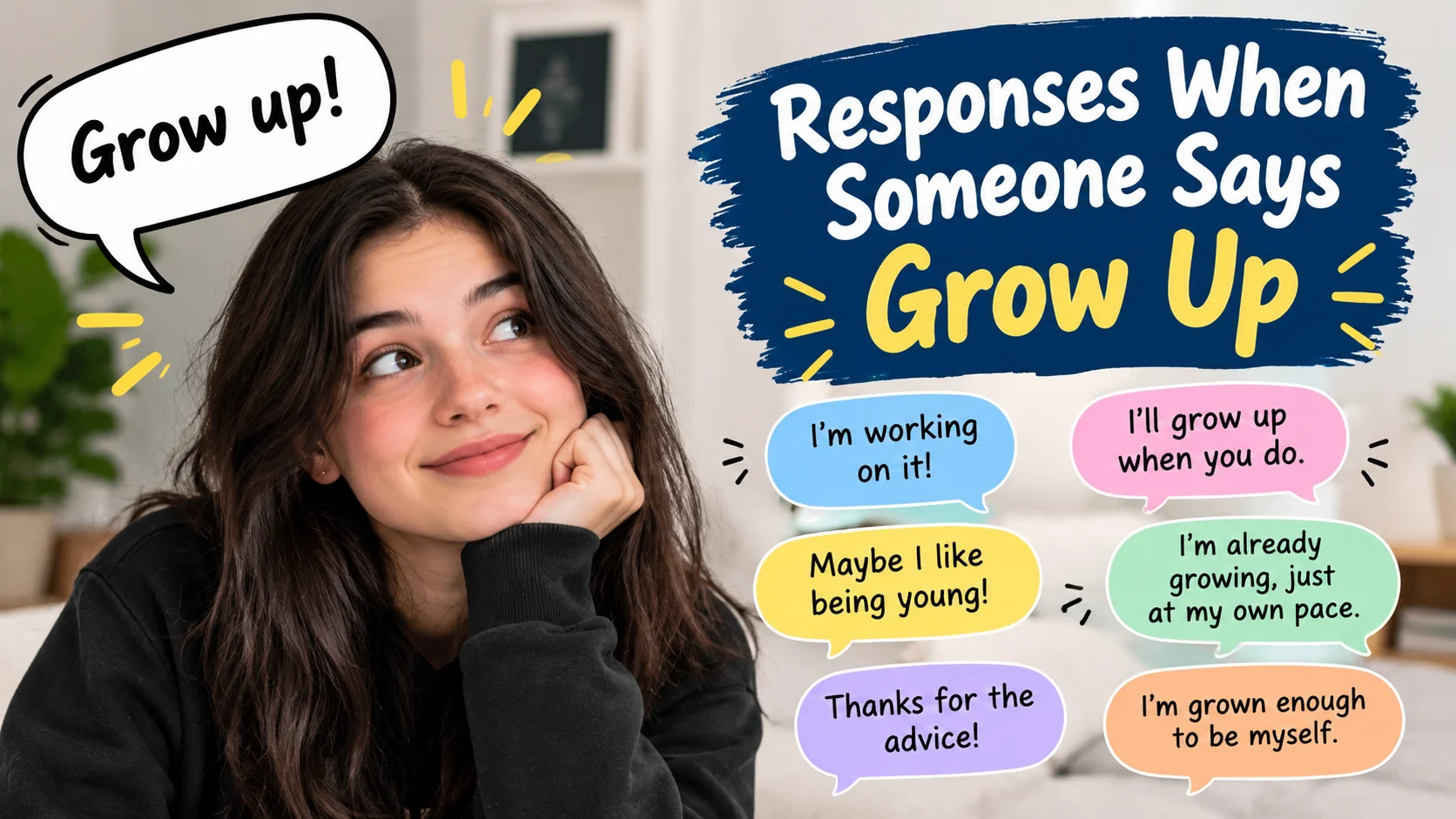
When someone tells you to “grow up,” the best response depends on their tone, your relationship, and the situation. You can answer with a funny comeback, a calm statement, a clever reply, or a respectful response that shows maturity without starting an argument. The key is to stand up for yourself without letting someone else’s words control your mood.
If you’re looking for responses when someone says grow up, you have plenty of options. If a friend is teasing you, a coworker is being disrespectful, a family member is criticizing you, or someone online is trying to provoke you, these replies can help you respond confidently. Choose a response that fits the moment, protects your dignity, and communicates exactly what you mean.
Funny Responses to “Grow Up”
A little humor can turn an awkward comment into a laugh. These replies work best when the other person is teasing you rather than genuinely trying to hurt your feelings.
Best for: Friends, playful arguments, and lighthearted conversations.
Alternative: “Growing up sounds exhausting. I’ll pass for now.”
Examples:
- “I tried, but adulthood didn’t come with a user manual.”
- “I’m growing up at my own speed. No need to rush the process.”
Sarcastic Comebacks to “Grow Up”
A sarcastic response can make your point without requiring a long explanation. Keep your delivery relaxed so the comeback sounds clever rather than unnecessarily hostile.
Best for: Someone who repeatedly makes judgmental comments.
Alternative: “Thanks for your unsolicited life advice.”
Examples:
- “I’ll consider that advice when I start asking for it.”
- “And here I thought maturity included minding your own business.”
Calm Responses That Show Maturity
Sometimes the strongest response is one that doesn’t match the other person’s attitude. A calm reply demonstrates that you can handle criticism without turning the conversation into a fight.
Best for: Serious discussions, disagreements, and emotionally charged moments.
Alternative: “Let’s talk about the actual issue instead.”
Examples:
- “I understand your opinion, but I don’t agree with your judgment.”
- “Being mature doesn’t mean I have to see everything your way.”
Clever Replies to “Grow Up”
A clever comeback challenges the assumption that maturity means behaving exactly as someone else expects. Use these replies when you want to make a point without sounding overly defensive.
Best for: Witty conversations and debates about behavior.
Alternative: “Maturity means thinking for yourself, too.”
Examples:
- “Growing up is a journey, not a competition.”
- “Age comes automatically; maturity takes self-awareness.”
Short and Confident Responses
You don’t always need a detailed explanation. A brief, confident answer can communicate that you’re comfortable with yourself and don’t feel obligated to defend every decision.
Best for: Quick conversations, texting, and situations where you want to move on.
Alternative: “I’m good with who I am.”
Examples:
- “I’m working on it.”
- “That’s your opinion.”
Respectful Responses to “Grow Up”
If you want to preserve the relationship, respond respectfully while making it clear that the comment isn’t particularly helpful. You can disagree without insulting the other person.
Best for: Family members, elders, mentors, and people you respect.
Alternative: “I appreciate your concern, but please explain what you mean.”
Examples:
- “I respect your perspective, but I see the situation differently.”
- “I’m always willing to learn, as long as we can speak respectfully.”
Responses That Set Clear Boundaries
Sometimes “grow up” is used to dismiss your feelings or embarrass you. A boundary-focused response helps you address the disrespect instead of arguing over your personality.
Best for: People who use insults during disagreements.
Alternative: “Please address my behavior without making personal attacks.”
Examples:
- “If something bothers you, tell me directly instead of insulting me.”
- “I’m happy to have a conversation, but not if we’re putting each other down.”
Playful Replies for Friends
When a friend tells you to grow up jokingly, you can keep the friendship’s playful energy alive with a lighthearted response.
Best for: Close friends, friendly teasing, and casual hangouts.
Alternative: “You knew what you signed up for.”
Examples:
- “Someone has to keep this friendship entertaining.”
- “I’ll grow up when you stop encouraging my nonsense.”
Funny Text Replies to “Grow Up”
Text messages make it easy to respond with a quick joke. Choose something that fits your usual texting style and won’t accidentally turn friendly teasing into an argument.
Best for: Messaging friends, siblings, or someone who enjoys banter.
Alternative: “Adulthood is still buffering.”
Examples:
- “Sorry, my maturity update hasn’t downloaded yet.”
- “I’ll submit my grown-up application tomorrow.”
Professional Responses at Work
At work, a comment like “grow up” can feel insulting or unprofessional. Keep your reply focused on the task, the feedback, and the need for respectful communication.
Best for: Workplace disagreements, meetings, and difficult professional conversations.
Alternative: “Let’s keep our discussion focused on the work.”
Examples:
- “If there’s a concern about my work, I’d appreciate specific feedback.”
- “I’m open to constructive criticism, provided we keep the conversation professional.”
Responses to a Partner Who Says “Grow Up”
When a romantic partner uses these words during an argument, it’s worth understanding what they mean before responding. You can acknowledge legitimate concerns without accepting disrespect.
Best for: Couples discussing disagreements, expectations, or behavior.
Alternative: “Let’s explain our concerns without criticizing each other.”
Examples:
- “If something I’ve done bothers you, please tell me what it is.”
- “I’m willing to work on myself, and I need us to communicate respectfully.”
Sweet Responses That Keep Things Light
A gentle response can defuse a tense moment when you don’t want to argue. These replies work when the other person is someone you care about and the comment isn’t part of a pattern of disrespect.
Best for: Friends, partners, and affectionate family conversations.
Alternative: “I’m still learning, just like everyone else.”
Examples:
- “Give me a little time; I’m a work in progress.”
- “I’ll grow up eventually, but I’ll always keep a little fun in my life.”
Responses to Family Members Who Say “Grow Up”
Family members may use this phrase when they disagree with your decisions or expect you to behave differently. Respond with respect while making room for your independence.
Best for: Conversations with parents, siblings, relatives, and guardians.
Alternative: “I hear your concerns, but I need room to make my own choices.”
Examples:
- “I’m learning to handle things my own way, even if you would do them differently.”
- “I respect your experience, but I’m allowed to make mistakes and learn from them.”
Comebacks for Someone Who Acts Superior
When someone says “grow up” as though they’re more mature than everyone else, a thoughtful comeback can challenge their attitude without becoming insulting.
Best for: Condescending people and conversations where someone talks down to you.
Alternative: “Maturity doesn’t require looking down on others.”
Examples:
- “Being mature also means respecting people who think differently.”
- “You can disagree with me without acting like you’re above me.”
Responses When Someone Says It During an Argument
During an argument, “grow up” can distract both people from the original issue. Bring the discussion back to the facts instead of trading insults.
Best for: Heated disagreements with friends, partners, or relatives.
Alternative: “Let’s address what happened instead of attacking each other.”
Examples:
- “Calling me immature doesn’t explain why you disagree with me.”
- “Let’s discuss the problem and leave personal insults out of it.”
Witty Replies About Being an Adult
Sometimes the best way to respond is to joke about the challenges of adulthood. These replies make fun of the pressure to act serious all the time.
Best for: Casual conversations, adulting jokes, and humorous social exchanges.
Alternative: “I’m an adult, but I still reserve the right to have fun.”
Examples:
- “I pay bills, meet deadlines, and still laugh at silly jokes. I’m doing fine.”
- “Growing up means responsibilities, not giving up every bit of fun.”
Responses That Show Emotional Intelligence
Emotional maturity involves listening, reflecting, and communicating honestly. A thoughtful response can show that you take personal growth seriously without accepting a vague insult as useful feedback.
Best for: Meaningful conversations and situations where genuine self-improvement matters.
Alternative: “I’m open to feedback when it’s specific and constructive.”
Examples:
- “If I’ve handled something poorly, tell me what I can do better.”
- “I believe maturity means recognizing mistakes and being willing to learn.”
Responses to “Grow Up” on Social Media
Online comments can be provocative, especially when people don’t know the full context. You can reply with humor, clarify your position, or simply refuse to give the comment more attention.
Best for: Instagram comments, Facebook discussions, TikTok, and other social platforms.
Alternative: “We can disagree without making it personal.”
Examples:
- “Different opinions exist. It’s okay if mine doesn’t match yours.”
- “Thanks for sharing your view. I’ll keep being myself.”
Responses When Someone Criticizes Your Hobbies
People sometimes mistake playful hobbies, games, collecting things, or creative interests for immaturity. You can remind them that enjoying something harmless doesn’t mean you lack responsibility.
Best for: Defending your interests and responding to judgmental friends or relatives.
Alternative: “Having hobbies doesn’t make me less mature.”
Examples:
- “I can take life seriously and still enjoy video games.”
- “My hobbies make me happy, and they aren’t hurting anyone.”
Responses When Someone Calls You Immature
If the comment seems serious, ask what behavior prompted it. This gives the other person an opportunity to offer meaningful feedback instead of leaving you guessing.
Best for: Personal disagreements, friendships, and situations where you want honest feedback.
Alternative: “Can you explain what I did that seemed immature?”
Examples:
- “I’m willing to hear you out if you can give me a specific example.”
- “I don’t mind constructive criticism, but labeling me doesn’t help.”
Funny Replies About Never Growing Up
Some people believe growing up means becoming serious all the time. These playful responses celebrate the idea that you can be responsible without losing your sense of wonder.
Best for: Lighthearted banter and conversations with people who enjoy humor.
Alternative: “I’ll grow older, but I won’t retire my inner child.”
Examples:
- “My birth certificate says adult; my personality has other plans.”
- “I have responsibilities, but I refuse to make boredom my personality.”
Responses When a Coworker Says “Grow Up”
A coworker’s personal remark can create unnecessary tension. Keep your response measured, especially if you need to maintain a productive working relationship.
Best for: Office conversations, team disagreements, and professional boundaries.
Alternative: “Let’s discuss the issue without personal comments.”
Examples:
- “I’m happy to hear your feedback if we can keep it relevant to the project.”
- “We can have different opinions and still treat each other professionally.”
Responses When a Stranger Says “Grow Up”
You don’t owe a stranger a long explanation about your personality or choices. A brief reply or no response at all may be the most effective option.
Best for: Public interactions, casual encounters, and conversations with people you barely know.
Alternative: “Have a good day.”
Examples:
- “We’re all entitled to our own opinions.”
- “I don’t think this conversation needs to continue.”
Responses When You Actually Made a Mistake
Sometimes criticism contains a useful point. If you behaved irresponsibly or hurt someone, acknowledging the mistake shows more maturity than trying to win the argument.
Best for: Apologizing, repairing relationships, and learning from difficult situations.
Alternative: “You’re right that I could have handled that better.”
Examples:
- “I see why that upset you, and I’ll try to handle it differently next time.”
- “I made a mistake, and I’m taking responsibility for it.”
Responses When Someone Uses “Grow Up” to Dismiss Your Feelings
Being mature doesn’t mean pretending you aren’t hurt, disappointed, excited, or frustrated. You can explain your feelings calmly while asking the other person to take them seriously.
Best for: Emotional conversations and relationships where your feelings are being minimized.
Alternative: “My feelings deserve to be heard, even when you disagree.”
Examples:
- “Expressing how I feel doesn’t mean I’m acting like a child.”
- “I’d rather talk about why this matters to me than argue over whether I’m mature.”
Responses That Turn the Comment Into a Conversation
If you care about the relationship, use the comment as an opportunity to understand what the other person expects from you. A genuine question can reveal whether there’s a real concern behind the remark.
Best for: Close relationships and disagreements that need a constructive solution.
Alternative: “What would you like me to handle differently?”
Examples:
- “You seem frustrated with me. Can we talk about what’s bothering you?”
- “I’d like to understand your point instead of arguing about labels.”
Responses for Someone Who Keeps Repeating It
Repeated comments can become disrespectful, especially when you’ve already explained your position. Be direct about the pattern and state what kind of communication you’re willing to accept.
Best for: Persistent teasing, repeated arguments, and people who ignore your requests.
Alternative: “Repeating the same insult won’t help us solve anything.”
Examples:
- “You’ve said that several times. If there’s a real issue, let’s discuss it.”
- “I’ve heard your opinion, and I’m not going to keep arguing about it.”
Responses That Defend Your Individuality
Maturity doesn’t require everyone to have the same personality, interests, or sense of humor. A confident response can remind the other person that being different isn’t automatically being immature.
Best for: People who criticize your style, personality, humor, or lifestyle.
Alternative: “I can grow as a person without becoming someone else.”
Examples:
- “I don’t need to copy your personality to prove I’m mature.”
- “I’m learning and improving while staying true to myself.”
Responses That End the Conversation Gracefully
Not every remark deserves a comeback. If the discussion is going nowhere, a polite exit protects your energy and prevents a small disagreement from becoming a bigger conflict.
Best for: Unproductive arguments, tense social situations, and conversations you want to leave peacefully.
Alternative: “Let’s agree to disagree and move on.”
Examples:
- “I understand your opinion. I’m going to leave it there.”
- “We don’t have to agree, so let’s move forward.”
Classy Responses That Speak for Themselves
A classy response communicates confidence without humiliation or hostility. Instead of trying to embarrass the other person, focus on your standards for respectful communication.
Best for: Public disagreements, social gatherings, and situations where you want to maintain your composure.
Alternative: “I prefer conversations that show mutual respect.”
Examples:
- “Maturity is demonstrated through actions, not insults.”
- “I’ll always choose a respectful conversation over a personal attack.”
FAQs:
What is the best response when someone says “grow up”?
A strong all-purpose response is, “If there’s something specific you’d like me to change, tell me respectfully.” It invites useful feedback without accepting a personal insult.
What is a funny comeback to “grow up”?
Try, “I tried, but adulthood didn’t come with a user manual.” It’s lighthearted and works well when a friend is joking with you.
How do you respond to “grow up” without being rude?
Stay calm and say, “I understand your opinion, but I’d appreciate it if you explained what you mean.” This keeps the conversation respectful while standing up for yourself.
What should you say when your partner tells you to grow up?
Ask what behavior concerns them and explain how the comment makes you feel. For example, say, “I’m willing to listen, but let’s talk about the issue without putting each other down.”
Should you ignore someone who says “grow up”?
Ignoring the comment can be a good choice when the person is provoking you, a stranger is being rude, or the conversation serves no purpose. If the relationship matters, a calm question may help resolve the underlying problem.
Conclusion
The best responses when someone says grow up are the ones that fit the situation and reflect your personality. A funny comeback can keep friendly teasing enjoyable, a clever reply can challenge an unfair judgment, and a respectful boundary can stop a conversation from becoming hurtful. When the criticism is valid, acknowledging your mistake is often the most mature response of all.
Remember that growing up doesn’t mean losing your humor, hiding your feelings, or pleasing everyone. True maturity includes knowing when to laugh, when to listen, when to stand up for yourself, and when to walk away.

I am Joshua Turner, an administrator at ReplyBost, helping create useful, clear, and engaging content that makes finding the right replies and responses easier.