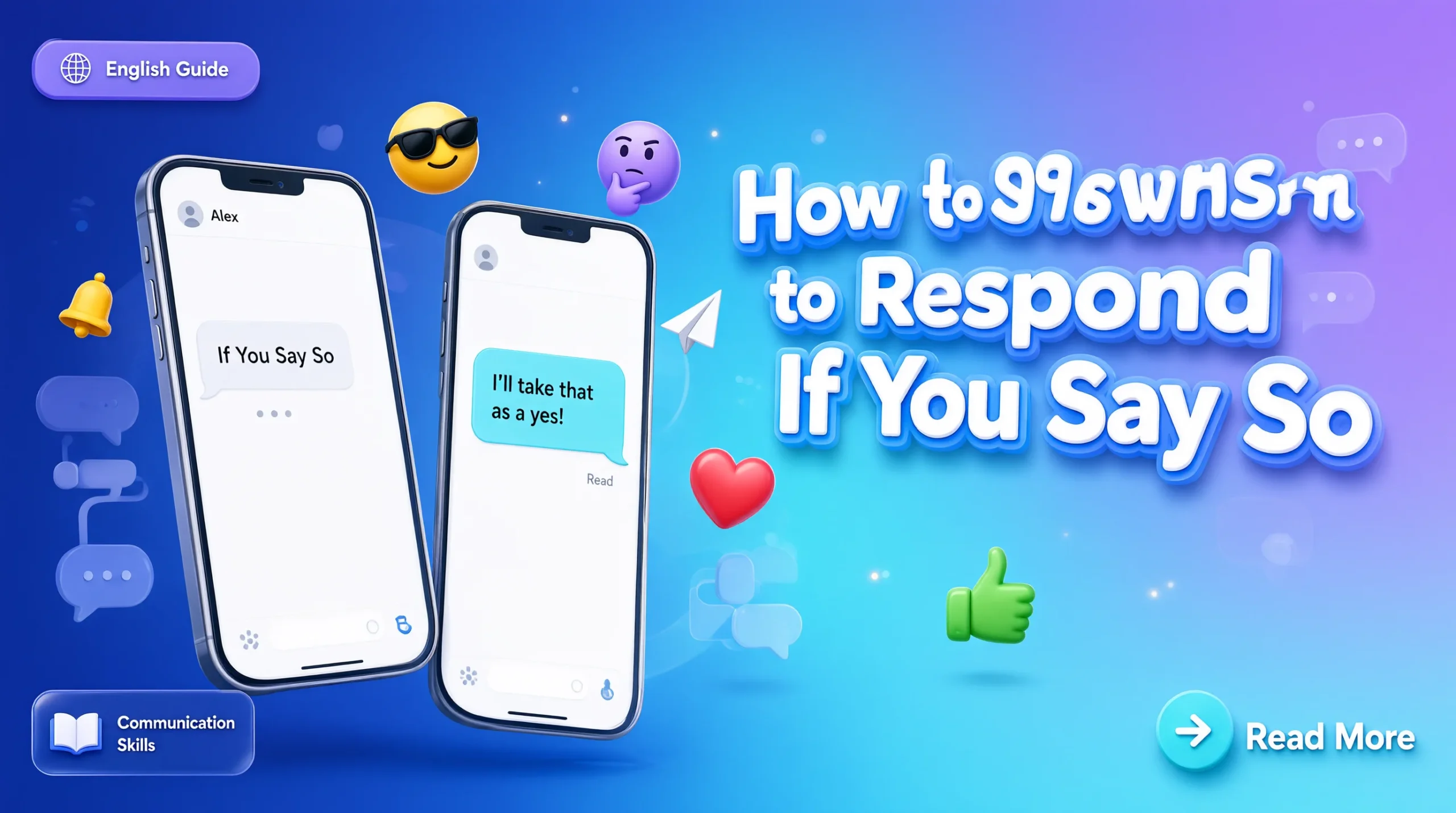
When someone says “If you say so,” they might be expressing doubt, sarcasm, frustration, or simply ending a conversation. The right response depends on their tone, your relationship, and if you want to keep things friendly, funny, or serious. Sometimes, a clever comeback works best, while other situations call for a calm and respectful answer.
If you’re wondering how to respond to “If you say so,” you can say something like “I do, but I’m happy to explain,” “Fair enough, believe what you want,” or “Well, I’m glad we agree.” These responses help you handle the comment naturally without sounding defensive. Here are 30 thoughtful, funny, casual, and confident replies for different situations.
30 Best Responses to “If You Say So”
• “I Do, Actually!”
Best for: Responding confidently when someone seems doubtful about what you’ve said.
Alternative: “Absolutely, and I stand by it.”
Examples:
- “I do, actually! I’m pretty sure about this one.”
- “Yes, I do. No second thoughts here.”
• “Well, I’m Glad We Agree!”
Best for: Turning a slightly sarcastic comment into a lighthearted moment.
Alternative: “Looks like we’re on the same page.”
Examples:
- “Well, I’m glad we agree, even if it took a while!”
- “Finally, a little agreement between us!”
• “You Don’t Have to Believe Me!”
Best for: When someone doubts your explanation and you don’t want to argue.
Alternative: “Believe whatever makes sense to you.”
Examples:
- “You don’t have to believe me, but I’m telling you the truth.”
- “That’s fine. I know what happened.”
• “Fair Enough!”
Best for: Keeping things casual when you don’t feel like continuing the discussion.
Alternative: “That’s a reasonable response.”
Examples:
- “Fair enough! We can leave it there.”
- “Fair enough, everyone has their own opinion.”
• “I Promise I’m Not Making This Up!”
Best for: When someone thinks you’re exaggerating or telling a questionable story.
Alternative: “I’m being completely serious.”
Examples:
- “I promise I’m not making this up. It really happened!”
- “Trust me, I couldn’t invent something this strange.”
• “That’s Your Choice!”
Best for: Responding confidently without forcing someone to accept your opinion.
Alternative: “You’re entitled to your own perspective.”
Examples:
- “That’s your choice. I’ve explained my side.”
- “You can think whatever you like. I’m comfortable with what I said.”
• “Why Do You Sound So Unconvinced?”
Best for: When you want to understand whether the person is genuinely doubtful or being sarcastic.
Alternative: “Is there something you’re not agreeing with?”
Examples:
- “Why do you sound so unconvinced? Did I miss something?”
- “You sound doubtful. Want me to explain?”
• “I Guess That’s Your Way of Agreeing!”
Best for: Friends who use sarcasm during everyday conversations.
Alternative: “I’ll take that as a yes.”
Examples:
- “I guess that’s your way of agreeing with me!”
- “Not the most enthusiastic agreement, but I’ll accept it.”
• “No Pressure to Agree With Me!”
Best for: Keeping disagreements respectful and avoiding unnecessary arguments.
Alternative: “We can have different opinions.”
Examples:
- “No pressure to agree with me. We’re allowed to think differently.”
- “It’s completely fine if you see things another way.”
• “I Said What I Said!”
Best for: Showing confidence when you’re certain about your statement.
Alternative: “And I stand by every word.”
Examples:
- “I said what I said, and I’m not taking it back!”
- “Exactly! My opinion hasn’t changed.”
• “Don’t Sound So Excited!”
Best for: Responding playfully when someone says it with an obvious sarcastic tone.
Alternative: “Your enthusiasm is overwhelming!”
Examples:
- “Don’t sound so excited! I might start believing you.”
- “Wow, that enthusiasm almost brought tears to my eyes!”
• “You Sound Like You Have Doubts!”
Best for: Encouraging someone to express what they really think.
Alternative: “Something tells me you’re not convinced.”
Examples:
- “You sound like you have doubts. Want to share them?”
- “I can tell you’re not completely buying my explanation.”
• “And That’s Perfectly Fine!”
Best for: Showing maturity when someone doesn’t share your opinion.
Alternative: “We don’t have to see everything the same way.”
Examples:
- “And that’s perfectly fine! We can agree to disagree.”
- “No worries. Different opinions make conversations interesting.”
• “Would You Like Me to Prove It?”
Best for: When someone questions a factual statement and you have evidence to support it.
Alternative: “I can show you if you’d like.”
Examples:
- “Would you like me to prove it, or should we leave it there?”
- “I’ve got the details if you want to see them.”
• “That’s Not Exactly a Convincing Response!”
Best for: Lightly calling out someone who sounds dismissive.
Alternative: “I’m guessing you’re not entirely convinced.”
Examples:
- “That’s not exactly a convincing response. What’s really on your mind?”
- “You could at least pretend to believe me!”
• “I Appreciate Your Enthusiasm!”
Best for: Using playful sarcasm with friends or someone who enjoys witty banter.
Alternative: “Your excitement means everything!”
Examples:
- “I appreciate your enthusiasm. Truly unforgettable!”
- “Thank you for that incredibly enthusiastic response!”
• “You Know What? Let’s Leave It There!”
Best for: Ending a conversation that is becoming unnecessarily argumentative.
Alternative: “Let’s agree to disagree and move on.”
Examples:
- “You know what? Let’s leave it there. No need to argue.”
- “We’ve both made our points. Let’s move on.”
• “I Wouldn’t Say It If I Didn’t Mean It!”
Best for: Reassuring someone that you’re sincere.
Alternative: “I’m being honest with you.”
Examples:
- “I wouldn’t say it if I didn’t mean it.”
- “You know I don’t make promises I can’t keep.”
• “That’s a Very Diplomatic Answer!”
Best for: Responding humorously when someone avoids giving a clear opinion.
Alternative: “You’ve certainly chosen your words carefully.”
Examples:
- “That’s a very diplomatic answer. I’ll give you that!”
- “You managed to disagree without actually disagreeing!”
• “You Can Always Ask Me Why!”
Best for: Keeping communication open when someone appears unconvinced.
Alternative: “I’m happy to explain my reasoning.”
Examples:
- “You can always ask me why instead of sounding doubtful.”
- “If something doesn’t make sense, just ask!”
• “Well, That’s One Way to Look at It!”
Best for: Responding politely when someone has a different interpretation.
Alternative: “I see where you’re coming from.”
Examples:
- “Well, that’s one way to look at it. I have a different perspective.”
- “Interesting point! I hadn’t considered it that way.”
• “I Was Hoping for a Better Response!”
Best for: Playful conversations when you expected a more enthusiastic reaction.
Alternative: “Come on, give me something better!”
Examples:
- “I was hoping for a better response than that!”
- “That’s all you’ve got? I expected more!”
• “You Don’t Sound Too Convinced!”
Best for: Friends, partners, or coworkers when you notice hesitation in their response.
Alternative: “Should I take that as a disagreement?”
Examples:
- “You don’t sound too convinced. Want to tell me why?”
- “Something tells me you have a different opinion.”
• “I’ll Take That as a Yes!”
Best for: Lighthearted conversations where you want to keep things moving.
Alternative: “Close enough to an agreement for me!”
Examples:
- “I’ll take that as a yes and move forward!”
- “Well, that’s the closest thing to agreement I’ve heard today.”
• “Confidence Looks Good on Me, Doesn’t It?”
Best for: Funny and slightly cheeky exchanges with people you’re comfortable around.
Alternative: “Someone has to be confident here!”
Examples:
- “Confidence looks good on me, doesn’t it?”
- “I can’t help being right sometimes!”
• “You Could Just Say You Disagree!”
Best for: When someone uses sarcasm instead of openly expressing their opinion.
Alternative: “It’s okay to tell me what you really think.”
Examples:
- “You could just say you disagree. I won’t take it personally.”
- “Come on, you don’t have to hide your opinion behind sarcasm.”
• “I Respect Your Doubts!”
Best for: Maintaining a respectful tone during disagreements.
Alternative: “I understand that you’re not completely convinced.”
Examples:
- “I respect your doubts, but I still believe what I’m saying.”
- “That’s understandable. You don’t have to see it my way.”
• “Well, At Least I Made You Think!”
Best for: A playful response when someone seems unsure about your point.
Alternative: “That’s something to consider, isn’t it?”
Examples:
- “Well, at least I made you think about it!”
- “Mission accomplished. I’ve given you something to consider.”
• “Let’s Not Turn This Into an Argument!”
Best for: Keeping conversations peaceful with family members, friends, or coworkers.
Alternative: “There’s no need to make this a disagreement.”
Examples:
- “Let’s not turn this into an argument. We’re just sharing opinions.”
- “I don’t want to argue. Let’s just move on.”
• “Believe It or Not, I’m Serious!”
Best for: When someone thinks you’re joking or exaggerating.
Alternative: “I’m genuinely telling you the truth.”
Examples:
- “Believe it or not, I’m serious about this!”
- “I know it sounds unbelievable, but it’s actually true.”
• “That’s Okay. Time Will Tell!”
Best for: Responding calmly when someone doubts your prediction or decision.
Alternative: “We’ll see how things turn out.”
Examples:
- “That’s okay. Time will tell who’s right.”
- “No worries. Let’s wait and see what happens.”
FAQs:
What does “If You Say So” mean?
“If you say so” usually means someone is accepting what you’ve said without necessarily believing or agreeing with you. Depending on their tone, it can express doubt, sarcasm, frustration, or reluctant acceptance.
Is “If You Say So” rude or sarcastic?
Not always. It can be a neutral response, but people often use it sarcastically when they disagree or don’t believe something. Your relationship and the speaker’s tone help determine its meaning.
How do you respond to “If You Say So” sarcastically?
You can respond with playful comebacks such as:
- “Your enthusiasm is overwhelming!”
- “I’ll take that as a standing ovation.”
- “Well, I wasn’t expecting a parade!”
- “That’s the most convincing agreement ever!”
How do you respond to “If You Say So” politely?
Try calm and respectful responses like:
- “That’s completely fine.”
- “I understand your perspective.”
- “We can agree to disagree.”
- “I’m happy to explain if you’d like.”
What is the best short reply to “If You Say So”?
Some natural short replies include “Absolutely,” “Fair enough,” “I do,” “Time will tell,” and “That’s your choice.” Choose one that matches the mood of the conversation.
Conclusion
Knowing how to respond to “If you say so” makes it easier to handle sarcasm, doubt, and awkward conversations without getting defensive. Whether you choose a funny comeback, a confident statement, or a polite response, the key is to match your words to the situation. Sometimes, a simple “Fair enough” is all you need, while other moments deserve a clever reply that keeps the conversation interesting.

I am Joshua Turner, an administrator at ReplyBost, helping create useful, clear, and engaging content that makes finding the right replies and responses easier.









1 thought on “How to Respond to “If You Say So”: 30 Smart, Funny, and Clever”