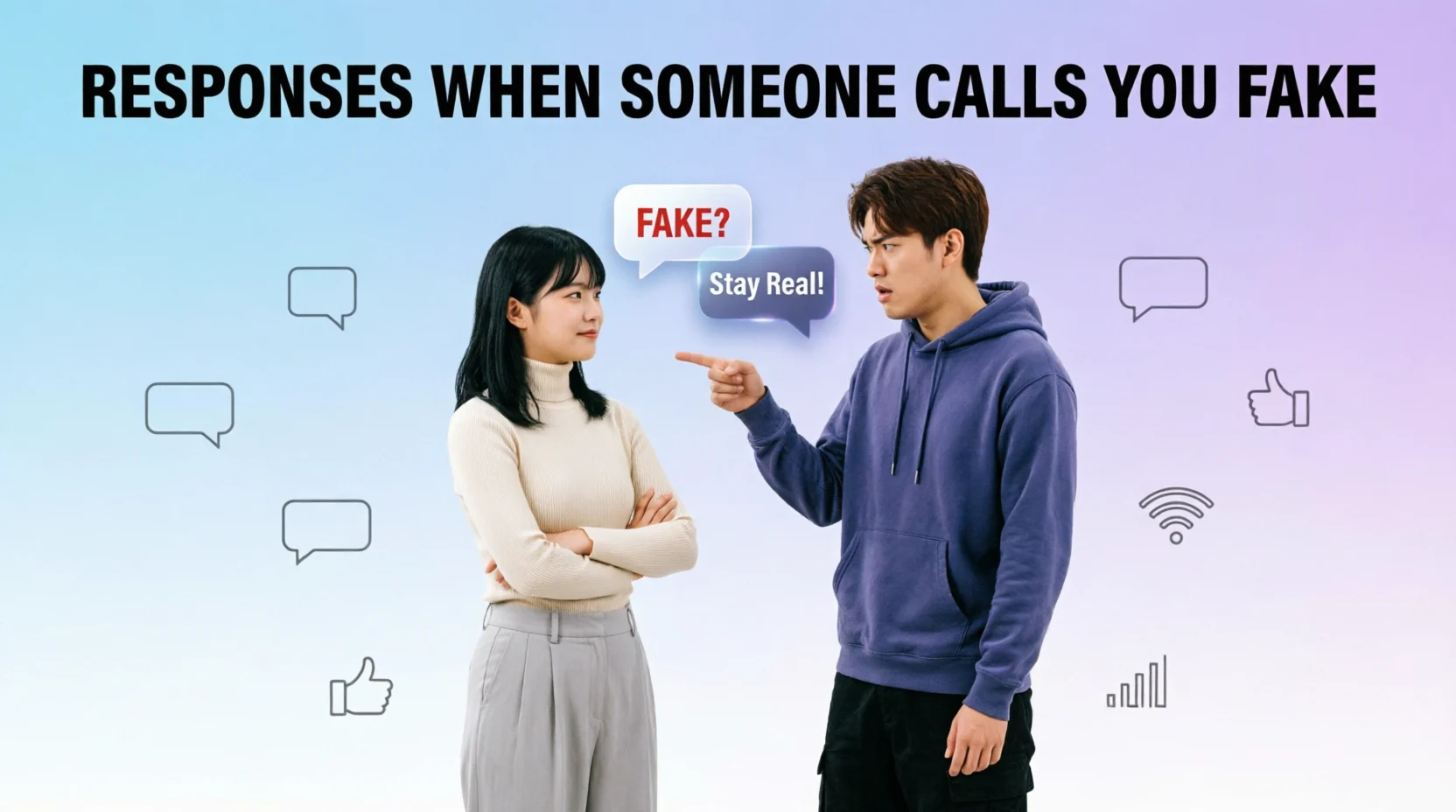
Being called fake can feel insulting, especially when you know you have been genuine with someone. The best responses when someone calls you fake depend on the situation: you can stay calm, respond with humor, set a boundary, or deliver a confident comeback without starting an unnecessary argument.
If a friend, coworker, family member, partner, or stranger accuses you of being fake, you do not have to prove your worth to everyone. A clever response can defend your character while keeping your dignity intact. Here are 30 natural replies you can use in person, through text messages, or on social media.
Friendly Responses When Someone Calls You Fake
A friendly reply works when you want to clear up a misunderstanding without making the situation uncomfortable. It shows that you are willing to communicate rather than argue.
Best for: Friends, acquaintances, or someone who may have misunderstood your intentions.
Alternative: “Maybe you haven’t seen the real me yet.”
Examples:
- “I’m sorry you feel that way. What made you think that?”
- “I promise I’m being myself. Maybe we just see things differently.”
Funny Comebacks to Someone Calling You Fake
Humor can turn an awkward accusation into a lighter moment. A playful comeback works best when the situation is not too serious and the other person is open to joking around.
Best for: Friends, playful teasing, and casual conversations.
Alternative: “If I were fake, I’d at least come with a warranty.”
Examples:
- “Fake? Wow, I didn’t know I was limited edition.”
- “I’m real enough to be standing right here!”
Confident Replies That Show Self-Respect
When someone calls you fake to provoke you, a confident response reminds them that their opinion does not define your identity. You can stand up for yourself without becoming defensive.
Best for: People who challenge your character or try to undermine your confidence.
Alternative: “You don’t have to like me, but don’t misrepresent me.”
Examples:
- “I know who I am, and that’s what matters.”
- “Your opinion doesn’t change my reality.”
Short and Sharp Responses to Being Called Fake
Sometimes, fewer words make a stronger statement. A short reply prevents the conversation from turning into a long argument about your personality.
Best for: Quick conversations, text messages, and situations where you do not want to explain yourself.
Alternative: “Think what you want.”
Examples:
- “Believe what you want.”
- “I’m comfortable with who I am.”
Classy Responses When Someone Calls You Fake
A classy reply lets you maintain your composure even when another person is disrespectful. Instead of insulting them back, focus on your values and the facts.
Best for: Public disagreements, mature conversations, and situations where your reputation matters.
Alternative: “I’d rather discuss facts than labels.”
Examples:
- “I’m sorry you see me that way, but I know my intentions.”
- “I prefer honest conversations over personal accusations.”
Savage Comebacks to Someone Calling You Fake
A sharp comeback can be appropriate when someone repeatedly insults you or tries to embarrass you. Keep it witty rather than cruel so you do not give the other person more drama to use against you.
Best for: Unfriendly exchanges, repeated accusations, and situations where a firm response is needed.
Alternative: “That’s a bold assumption for someone who doesn’t know my story.”
Examples:
- “You seem pretty confident about something you know so little about.”
- “Calling me fake doesn’t make your opinion a fact.”
Calm Responses That Avoid Arguments
Not every accusation deserves a debate. Staying calm can help you avoid unnecessary stress, especially when the other person seems determined to provoke you.
Best for: Heated conversations, misunderstandings, and emotionally charged situations.
Alternative: “Let’s talk when we’re both ready to be reasonable.”
Examples:
- “I’m not interested in arguing about my character.”
- “If there’s a real issue, we can discuss it calmly.”
Respectful Replies to a Friend Who Calls You Fake
Hearing this from a friend can hurt more than hearing it from a stranger. A respectful response gives your friendship a chance to recover while making it clear that the accusation matters to you.
Best for: Close friends, misunderstandings, and repairing strained friendships.
Alternative: “I thought we knew each other better than that.”
Examples:
- “That hurts coming from you. Can we talk about what’s bothering you?”
- “If I’ve done something to upset you, I’d rather hear it directly.”
Responses When Your Partner Calls You Fake
When a romantic partner questions your authenticity, it helps to understand what prompted the accusation. A thoughtful response encourages an honest discussion without accepting blame for something you did not do.
Best for: Boyfriends, girlfriends, spouses, and romantic relationships.
Alternative: “I want us to understand each other instead of making assumptions.”
Examples:
- “I’m being genuine with you, and I’d like to know why you feel otherwise.”
- “If something I’ve done hurt your trust, let’s talk about it honestly.”
Professional Responses When a Coworker Calls You Fake
Workplace disagreements require a measured response. Avoid trading insults, and bring the discussion back to specific behavior, communication, and professional expectations.
Best for: Office conflicts, workplace gossip, and disagreements with colleagues.
Alternative: “Let’s keep this professional and focus on the issue.”
Examples:
- “If you have a concern about my work or conduct, please explain it specifically.”
- “I’d appreciate discussing the facts rather than making personal judgments.”
Polite Responses to a Family Member Calling You Fake
Family members may judge your decisions, personality, or lifestyle because they expect you to behave a certain way. A polite but firm response can help you express yourself without escalating family tension.
Best for: Parents, siblings, relatives, and family gatherings.
Alternative: “You may not understand my choices, but that doesn’t make me fake.”
Examples:
- “I respect your opinion, but I know I’m being true to myself.”
- “We don’t have to agree on everything to respect each other.”
Responses When Someone Calls You Fake Over Text
Text messages can make accusations sound harsher because the other person cannot hear your tone. A clear, brief response can prevent unnecessary back-and-forth messaging.
Best for: WhatsApp, SMS, private messages, and online conversations.
Alternative: “If there’s something specific bothering you, tell me.”
Examples:
- “What exactly made you feel that way?”
- “I’m happy to clear up a misunderstanding, but I won’t argue over labels.”
Social Media Comebacks for Being Called Fake
Online accusations can attract attention from people who do not know the full story. A composed response, or no response at all, can prevent a small disagreement from becoming a public spectacle.
Best for: Instagram comments, Facebook posts, TikTok comments, and online discussions.
Alternative: “Not everyone needs to understand me.”
Examples:
- “You know a post, not my whole life.”
- “I’m not here to convince strangers of who I am.”
Responses When Someone Calls You Fake Without Evidence
An unsupported accusation deserves a request for clarity rather than an emotional defense. Asking for specific examples encourages a more productive conversation and exposes whether the person has a genuine concern.
Best for: Baseless accusations, rumors, and misunderstandings.
Alternative: “Can you explain what makes you say that?”
Examples:
- “That’s a serious claim. What have I actually done?”
- “I’m open to hearing your concern, but I need something specific to respond to.”
Responses When Someone Calls You Fake Out of Jealousy
Sometimes an accusation comes from competition, insecurity, or resentment. You cannot know someone’s motive without evidence, so avoid assuming jealousy and focus on how you want to handle the interaction.
Best for: Competitive friendships, social tension, and people who frequently criticize you.
Alternative: “I don’t want to compete with anyone. I’m just being myself.”
Examples:
- “You can have your opinion, but I’m comfortable with my life.”
- “I’d rather focus on my own growth than compare myself with others.”
Witty Replies When Someone Says You’re Two-Faced
Being called two-faced suggests that someone believes you act differently around different people. A witty response can lighten the moment, but a sincere explanation may be better if the accusation concerns trust.
Best for: Teasing among friends or a casual disagreement about your behavior.
Alternative: “Having different sides doesn’t mean I’m dishonest.”
Examples:
- “Two-faced? I can barely manage the one I’ve got.”
- “Different situations bring out different sides of people. That’s called being human.”
Responses When Someone Calls You Fake for Being Nice
Some people interpret kindness as an attempt to gain attention or favors. You can explain that being considerate is a choice without insisting that everyone must believe you.
Best for: People who question your kindness, generosity, or friendly behavior.
Alternative: “I don’t need a hidden reason to treat people well.”
Examples:
- “Being nice doesn’t automatically mean I’m pretending.”
- “I choose to treat people with respect because that’s how I want to live.”
Replies When Someone Says You’re Pretending to Be Someone Else
People sometimes mistake personal growth, changing interests, or a new style for pretending. A confident response can explain that you are allowed to evolve while remaining authentic.
Best for: Personal changes, new social circles, and criticism about your lifestyle.
Alternative: “Growing as a person doesn’t mean losing myself.”
Examples:
- “I’m learning and changing, just like everyone else.”
- “I’m not pretending to be anyone. I’m becoming more comfortable with myself.”
Responses When Someone Calls You Fake in Front of Others
Public accusations can tempt you to defend every detail of your life. Instead, keep your response brief and avoid turning the moment into a performance for an audience.
Best for: Group gatherings, parties, classrooms, and public disagreements.
Alternative: “If you have an issue with me, let’s discuss it privately.”
Examples:
- “I’m happy to talk about this, but not as a public argument.”
- “You can ask me directly instead of making assumptions in front of everyone.”
Responses When Someone Calls You Fake but You Know You’re Honest
When you have acted honestly, you can calmly state your position without trying to force the other person to agree. Your actions over time often communicate more than repeated explanations.
Best for: Honest disagreements, trust issues, and accusations that contradict your intentions.
Alternative: “I can explain my actions, but I can’t control your beliefs.”
Examples:
- “I’ve been honest with you, and I’m comfortable standing by what I said.”
- “I know what happened, and I’m willing to discuss it openly.”
Sweet Responses That Keep the Peace
A gentle reply can be useful when you care about the relationship and want to reduce tension. You can remain kind without pretending the accusation did not hurt.
Best for: Loved ones, sensitive conversations, and people you do not want to upset.
Alternative: “I’d rather understand each other than fight.”
Examples:
- “I don’t want you to feel that way about me. Can we talk?”
- “We might have misunderstood each other, and I’d like to make things right.”
Responses When Someone Calls You Fake as a Joke
If the other person is teasing you affectionately, matching their playful tone can keep the conversation fun. If the joke makes you uncomfortable, you can still respond lightly while setting a boundary.
Best for: Friendly banter, group chats, and playful conversations.
Alternative: “Careful, my authenticity certificate is right here.”
Examples:
- “Fake? Should I come with a warning label?”
- “That’s rich coming from someone who uses filters!”
Mature Responses That Set Clear Boundaries
You do not need to tolerate repeated personal attacks to prove that you are a mature person. A boundary tells the other person how you expect to be treated and what you will do if the disrespect continues.
Best for: Repeated insults, unhealthy relationships, and ongoing personal conflicts.
Alternative: “I’m willing to talk, but I’m not willing to be insulted.”
Examples:
- “You can disagree with me without attacking my character.”
- “If this conversation stays disrespectful, I’m going to walk away.”
Responses When Someone Calls You Fake for Changing
Changing your opinions, habits, or priorities does not automatically make you dishonest. You can acknowledge that you have changed while explaining that personal growth is a normal part of life.
Best for: Old friends, former classmates, relatives, and people who knew you years ago.
Alternative: “I’m not the same person I was before, and that’s okay.”
Examples:
- “I’ve grown and learned new things. That doesn’t make me fake.”
- “People change as they experience life, and I’m no exception.”
Replies When Someone Calls You Fake for Attention
If someone accuses you of seeking attention, avoid getting trapped in a debate about your motives. Calmly clarify your intentions and move on if the conversation becomes unproductive.
Best for: Social circles, online disagreements, and situations involving gossip.
Alternative: “You don’t have to agree with my choices, but please don’t assume my intentions.”
Examples:
- “I’m sharing my life, not asking everyone for approval.”
- “Not everything I do is about getting attention.”
Responses When Someone Calls You Fake Because of Rumors
Rumors can damage relationships when people accept claims without checking the facts. Ask what the person heard and offer to clarify the truth without spreading more gossip.
Best for: School, workplaces, friend groups, and community disagreements.
Alternative: “I’d appreciate the chance to tell you my side before you decide.”
Examples:
- “Please ask me directly instead of believing everything you hear.”
- “If someone told you something about me, let’s talk about the facts.”
Responses When Someone Calls You Fake and You Feel Hurt
It is normal to feel upset when someone questions your character. You can express that feeling honestly without attacking the other person or pretending the comment does not matter.
Best for: Close relationships, emotionally difficult conversations, and personal disagreements.
Alternative: “That accusation hurts, especially because I care about being genuine.”
Examples:
- “I’m not going to pretend that didn’t hurt, but I’d like to understand why you said it.”
- “I care about being honest, so hearing that from you is difficult.”
Funny Responses When a Friend Calls You Fake Online
Online banter between friends often benefits from a short, humorous reply. Choose something that matches your friendship and avoids revealing private information or humiliating the other person.
Best for: Friendly comment sections, memes, and group chats.
Alternative: “My authenticity subscription is fully paid.”
Examples:
- “I’m not fake; I’m just a limited-edition human.”
- “Please contact customer support if you have concerns about my existence.”
Responses When Someone Calls You Fake but Won’t Explain Why
If someone refuses to explain the accusation, you cannot resolve the issue by guessing. Ask once for a clear explanation, then decide whether the conversation is worth continuing.
Best for: Vague criticism, circular arguments, and people who make repeated accusations without details.
Alternative: “I can’t address a problem you won’t explain.”
Examples:
- “I’m willing to listen, but I need more than just the word fake.”
- “If you don’t want to explain your concern, there’s nothing more I can say.”
Final Comebacks When You Want to End the Conversation
Sometimes the healthiest response is to close the discussion rather than win it. A firm, final statement can help you leave an unproductive exchange without adding more insults.
Best for: Persistent arguments, disrespectful conversations, and situations where you have already explained yourself.
Alternative: “I’ve said what I needed to say, so I’m leaving it here.”
Examples:
- “You are entitled to your opinion, and I’m entitled to move on.”
- “I won’t keep defending myself against the same accusation. Take care.”
FAQs:
What is the best response when someone calls you fake?
A strong all-purpose response is, “What makes you say that?” It is calm, confident, and encourages the other person to explain the accusation instead of turning the conversation into an argument.
How do you respond to someone calling you fake over text?
Keep your message brief and clear. You could say, “If I’ve done something that made you feel this way, tell me directly.” This gives the other person a chance to explain without creating unnecessary drama.
What is a savage comeback for someone who calls you fake?
Try, “Calling me fake doesn’t make your opinion a fact.” It is direct and confident without relying on personal insults.
Should you ignore someone who calls you fake?
Ignoring the accusation can be appropriate when the person is trolling, seeking attention, or repeatedly trying to provoke you. If the person matters to you or raises a specific concern, a calm conversation may be more helpful.
How do you prove you’re not fake?
Be consistent in your words, actions, and treatment of others. If someone has a genuine concern, listen to their specific example and clarify any misunderstanding. You do not have to convince every person who misunderstands you.
Conclusion
The best responses when someone calls you fake are the ones that fit the situation and protect your self-respect. A funny comeback can work with friends, a calm explanation can help repair trust, and a firm boundary can stop repeated disrespect.
You do not need to respond with anger or prove your character to everyone. Choose your words thoughtfully, stay true to your values, and remember that being misunderstood does not automatically make you inauthentic.

I am Joshua Turner, an administrator at ReplyBost, helping create useful, clear, and engaging content that makes finding the right replies and responses easier.