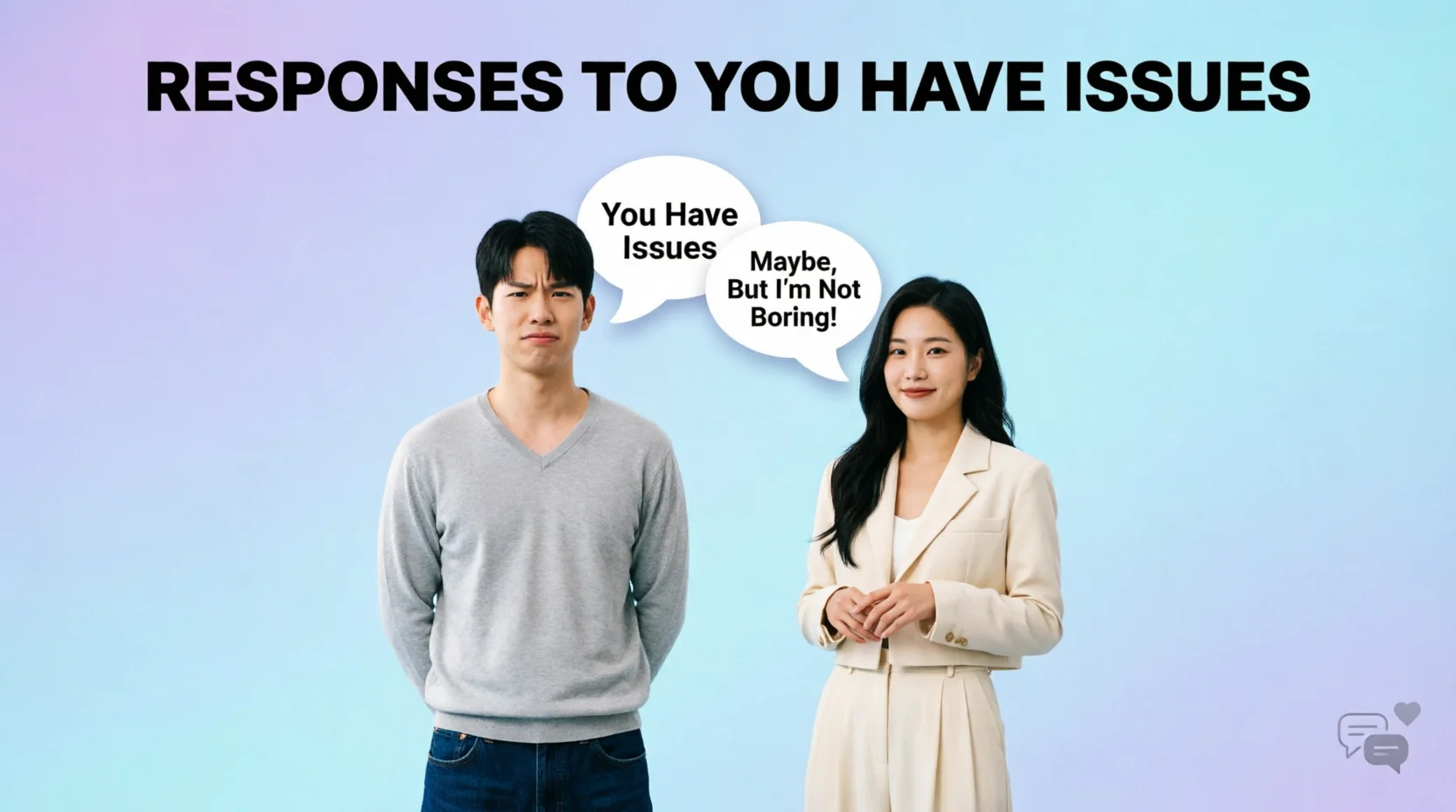
When someone says “you have issues,” the best response depends on their tone and your relationship. You can reply with humor, confidence, sarcasm, or calm maturity. For example, say, “Don’t we all?” for a casual comeback or “What makes you say that?” when you genuinely want to understand their concern.
If a friend is teasing you, a partner is annoyed, or a coworker makes a personal comment, you don’t have to get defensive. These responses to “you have issues” will help you handle the situation naturally, protect your self-respect, and keep the conversation moving without unnecessary drama.
Funny Responses to “You Have Issues”
Best for: Friends who tease you playfully and enjoy a little humor.
Alternative: “I’m a limited edition. What did you expect?”
Examples:
“Of course I do. I’m a whole subscription package.”
“Please take a number. My issues are being handled in order.”
Sarcastic Comebacks to “You Have Issues”
Best for: Someone making a snarky remark when you want to respond with a little attitude.
Alternative: “And you came all this way to diagnose me?”
Examples:
“Wow, thank you for that completely unsolicited assessment.”
“Congratulations! You’ve discovered something nobody asked you to investigate.”
Confident Responses Without Getting Defensive
Best for: Situations where someone tries to make you feel insecure or embarrassed.
Alternative: “I’m comfortable with who I am.”
Examples:
“Everyone has imperfections. I’m not ashamed of mine.”
“You’re entitled to your opinion, but it doesn’t define me.”
Calm Responses That Avoid Arguments
Best for: Conversations that are becoming heated and need a little breathing room.
Alternative: “Let’s talk about this without attacking each other.”
Examples:
“Maybe we see things differently, and that’s okay.”
“I’d rather understand the problem than argue about labels.”
Short and Simple Replies to “You Have Issues”
Best for: Text messages, casual conversations, or moments when you don’t want to explain yourself.
Alternative: “Don’t we all?”
Examples:
“Fair enough.”
“Welcome to the club.”
Playful Replies for Your Best Friend
Best for: Best friends who know your personality and joke around without meaning harm.
Alternative: “That’s why you keep me around!”
Examples:
“And yet, you still choose to hang out with me.”
“Friendship includes complimentary emotional chaos.”
Clever Responses That Turn the Joke Around
Best for: Someone who enjoys witty banter and quick comebacks.
Alternative: “I’m just keeping life interesting.”
Examples:
“I’m not complicated; I’m an advanced model.”
“My personality comes with bonus features.”
Polite Responses When Someone Is Being Rude
Best for: Acquaintances, strangers, or situations where you want to remain respectful.
Alternative: “That’s a rather personal thing to say.”
Examples:
“I’d appreciate it if we kept the conversation respectful.”
“I’m happy to talk, but personal remarks aren’t necessary.”
Mature Responses That Show Emotional Intelligence
Best for: Serious conversations where the other person may have a genuine concern.
Alternative: “I’m open to feedback if you explain what you mean.”
Examples:
“If something I’ve done bothers you, let’s discuss it constructively.”
“I can reflect on my behavior without accepting a vague judgment.”
Responses to “You Have Issues” From Your Partner
Best for: Relationship disagreements when you want to understand your partner instead of escalating the conflict.
Alternative: “Tell me what’s bothering you, and I’ll listen.”
Examples:
“Are you upset about something specific I’ve done?”
“I care about us, so let’s work through this together.”
Flirty Responses to “You Have Issues”
Best for: Lighthearted flirting with someone who enjoys playful teasing.
Alternative: “Maybe, but you seem interested.”
Examples:
“And somehow, you still find me fascinating.”
“Careful, my charm might be one of the issues.”
Sweet Responses That Keep Things Light
Best for: Someone you care about when you want to respond warmly rather than sarcastically.
Alternative: “I’m a work in progress, just like everyone else.”
Examples:
“Maybe a little, but I’m trying my best.”
“Good thing I have people who care about me.”
Responses When Someone Says It Out of Anger
Best for: Arguments where emotions are running high and you want to avoid making matters worse.
Alternative: “Let’s discuss the actual problem when we’re both calmer.”
Examples:
“I can hear that you’re upset, but insults won’t help us solve this.”
“Tell me what happened instead of attacking my character.”
Responses to “You Have Issues” in a Text Message
Best for: Text conversations where a short, clear reply works better than a long explanation.
Alternative: “Care to elaborate?”
Examples:
“Lol, which one are we talking about today?”
“Okay, but what’s your point?”
Professional Responses in the Workplace
Best for: Coworkers or colleagues who make personal comments during work-related conversations.
Alternative: “Could you clarify your concern in a professional way?”
Examples:
“Let’s focus on the work and the specific issue that needs resolving.”
“If there’s a concern about my performance, I’m happy to discuss it constructively.”
Responses to a Family Member Who Says You Have Issues
Best for: Family disagreements where you want to set boundaries without creating unnecessary tension.
Alternative: “I know you may have concerns, but please talk to me respectfully.”
Examples:
“We don’t have to agree on everything to respect each other.”
“If something is bothering you, I’d rather hear it directly.”
Untamed but Classy Comebacks
Best for: Someone who repeatedly makes unnecessary personal remarks and needs a firm response.
Alternative: “Your opinion isn’t a substitute for facts.”
Examples:
“That’s a bold conclusion based on so little information.”
“Thanks for sharing. I’ll give that opinion the attention it deserves.”
Responses That Ask Them to Explain Themselves
Best for: Situations where you want to know whether the comment has a genuine point behind it.
Alternative: “What exactly do you mean by that?”
Examples:
“Can you give me an example of what you’re talking about?”
“Is there something specific about my behavior that concerns you?”
Responses That Show Self-Awareness
Best for: Conversations with people who know you well and may have noticed a behavior worth discussing.
Alternative: “I’m aware I have things to work on.”
Examples:
“I’m not perfect, but I’m always learning.”
“I have my flaws, and I’m working on becoming better.”
Responses When You Know They’re Right
Best for: Moments when you recognize that your behavior may have contributed to a problem.
Alternative: “I can’t argue with that one.”
Examples:
“Honestly, I’ve been dealing with a few things lately.”
“Fair point. I probably could have handled that better.”
Responses When You Disagree With Them
Best for: Situations where someone misjudges you or misunderstands your actions.
Alternative: “I don’t see it that way.”
Examples:
“Having a different opinion doesn’t mean something is wrong with me.”
“You may disagree with my choices, but that doesn’t automatically make them a problem.”
Responses to Someone Who Keeps Repeating It
Best for: People who repeatedly use the same insult to provoke or embarrass you.
Alternative: “Repeating it doesn’t make it more meaningful.”
Examples:
“You’ve made your point. Can we move on now?”
“If you have something constructive to say, I’m listening.”
Humorous Replies for Social Media
Best for: Comment sections, playful posts, and conversations where a funny one-liner fits the mood.
Alternative: “It’s called having personality.”
Examples:
“Plot twist: the issues are part of the character development.”
“Not everyone can handle this much content.”
Responses When a Crush Says You Have Issues
Best for: Playful conversations with a crush when you want to keep the interaction relaxed.
Alternative: “Maybe you can help me figure them out.”
Examples:
“Is that your way of saying I’m interesting?”
“Maybe, but you haven’t run away yet.”
Responses When a Stranger Makes the Comment
Best for: Unwanted remarks from people who don’t know you well.
Alternative: “You don’t know me well enough to make that judgment.”
Examples:
“That’s an interesting assumption to make about a stranger.”
“Let’s not make personal judgments about people we don’t know.”
Responses That Set Clear Boundaries
Best for: Situations where someone uses personal criticism to embarrass, control, or provoke you.
Alternative: “You can disagree with me without insulting me.”
Examples:
“I’m willing to discuss the issue, but not if you keep attacking me personally.”
“Please speak to me respectfully, or let’s end this conversation.”
Responses That Encourage an Honest Conversation
Best for: Close relationships where resolving a misunderstanding matters more than winning an argument.
Alternative: “Let’s figure out what’s actually bothering you.”
Examples:
“I want to understand your perspective, so please be specific.”
“If I’ve hurt you, tell me how, and we can talk about it.”
Responses When Someone Is Trying to Embarrass You
Best for: Public settings where you want to remain composed rather than give someone a dramatic reaction.
Alternative: “That’s not something we need to discuss here.”
Examples:
“If you have a genuine concern, you can talk to me privately.”
“I’m not embarrassed by being human.”
Responses That End the Conversation Gracefully
Best for: Exchanges that are going nowhere and aren’t worth more of your energy.
Alternative: “I don’t think this conversation is productive anymore.”
Examples:
“Let’s agree to disagree and leave it there.”
“I’m going to move on from this conversation now.”
Positive Responses That Show Growth
Best for: Situations where you want to acknowledge your imperfections without letting criticism define you.
Alternative: “I’m learning, growing, and figuring things out.”
Examples:
“I’m not where I want to be yet, but I’m making progress.”
“Everybody has something to work on, and I’m no exception.”
The Best All-Purpose Responses to “You Have Issues”
Best for: When you don’t know whether the person is joking, criticizing you, or trying to start an argument.
Alternative: “Maybe. What makes you say that?”
Examples:
“Don’t we all? At least life isn’t boring.”
“If there’s something specific you want to discuss, I’m listening.”
FAQs:
What is the best comeback to “You have issues”?
A clever, confident response is, “Don’t we all?” It’s short, lighthearted, and shows that you don’t feel the need to defend yourself against every comment.
How do you respond when someone says you have issues rudely?
Stay calm and set a boundary. You could say, “If you have a concern, explain it respectfully.” This addresses their behavior without turning the exchange into another argument.
What is a funny response to “You have issues”?
Try saying, “I’m a limited edition. Not everyone understands the design.” It works well with friends who are joking and appreciate playful humor.
What should you text back when someone says you have issues?
A simple message like “Care to elaborate?” invites them to explain what they mean. If they’re clearly trying to provoke you, a brief “Okay, if you say so” can help you avoid unnecessary drama.
Should you take it personally when someone says you have issues?
Not automatically. The comment might be a joke, a frustrated reaction, or poorly expressed feedback. Consider the person’s tone, your relationship, and whether they identify a specific behavior you can reasonably address.
Conclusion
The best responses to “you have issues” depend on the person, the situation, and what you want to achieve. A funny comeback can keep friendly teasing entertaining, while a calm question can uncover a genuine concern. When someone is being disrespectful, a firm boundary may be the strongest answer.
Remember, you don’t have to prove yourself to everyone. Choose a response that reflects your personality, protects your peace, and keeps the conversation moving in a direction you feel comfortable with.

I’m Ethan Morgan, a writer at ReplyBost, passionate about creating helpful replies, clever responses, and practical conversation ideas that make communication easier and more confident.